EARTHQUAKE ENGINEERING / SOURCE-BASED D2 TESTS
Kratos FEM: nonlinear steel cycles, IDA and Pushover research
Explore DÈLGHEM benchmark results computed using KratosMultiphysics on native Apple Silicon systems. The published nonlinear static case is an axial cyclic steel specimen; lateral building Pushover capacity remains under qualification, and no unsupported capacity or collapse is claimed.
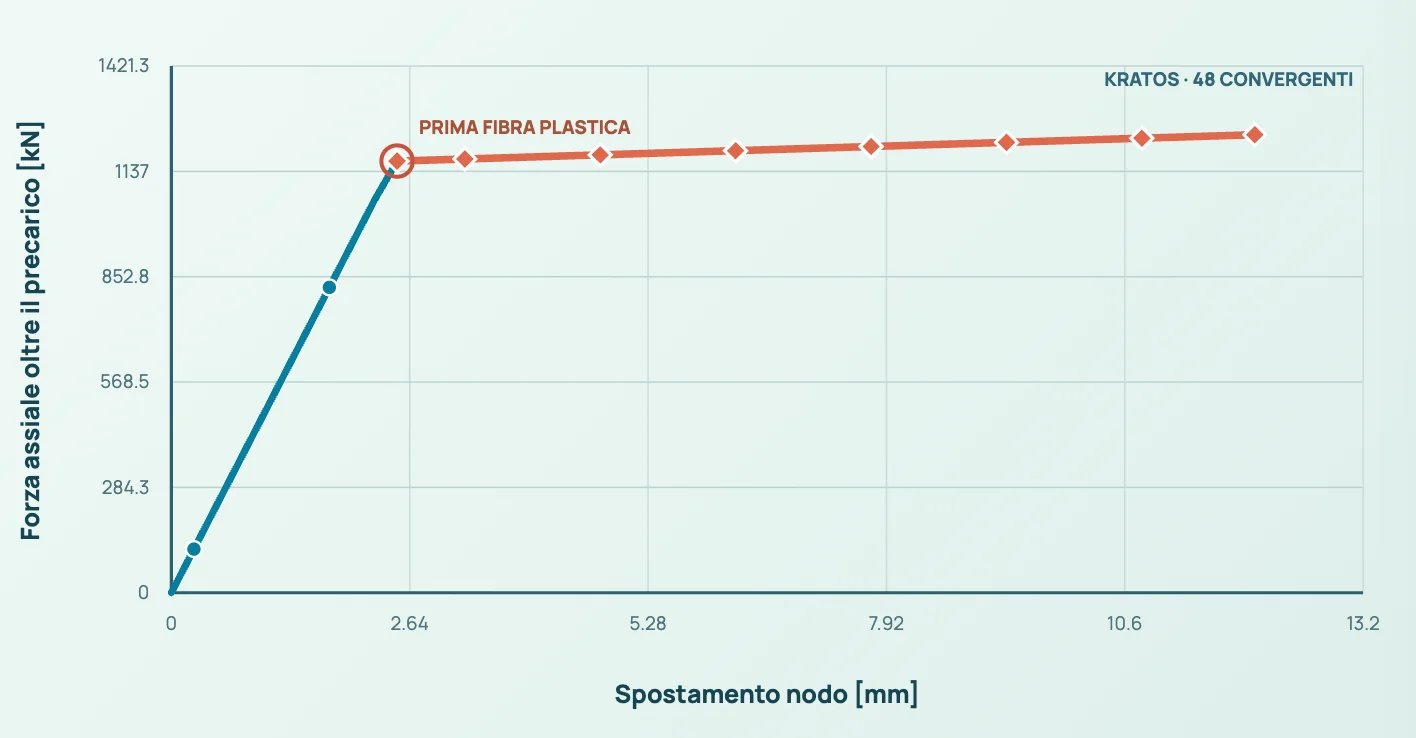
How axial cyclic loading differs from lateral Pushover
A structural Pushover analysis tracks the increasing nonlinear response to lateral action or imposed displacement. Interpreting building capacity requires a representative structural model, correctly applied constraints and load pattern, material constitutive laws, convergence analysis and performance criteria. A post-yield line is not automatically a validated building capacity curve.
The static steel benchmark currently available on the DÈLGHEM website is a KratosMultiphysics axial cyclic response of a 3 m S235 IPE 300 specimen. It is not a lateral building Pushover. That distinction is explicit because the numerical source has a verified domain narrower than the intended full product.
Genuine Kratos fiber plasticity in 240 accepted increments
Five sequential loading, unloading and reversal branches are available from the Kratos nonlinear displacement-control solver. The calculation contains 240 accepted variable states after axial preload, with steel-fiber plasticity documented by integration-point responses. The highest observed equivalent plastic strain in the case is approximately 0.625%.
The site shows the initial elastoplastic branch, the full signed axial reaction–displacement loop and a plot of plastic strain versus accepted step. The force is referenced to the end-of-preload state. These are actual recorded solver states, without interpolation to invented failure points or a fabricated collapse displacement.
Incremental Dynamic Analysis from Kratos
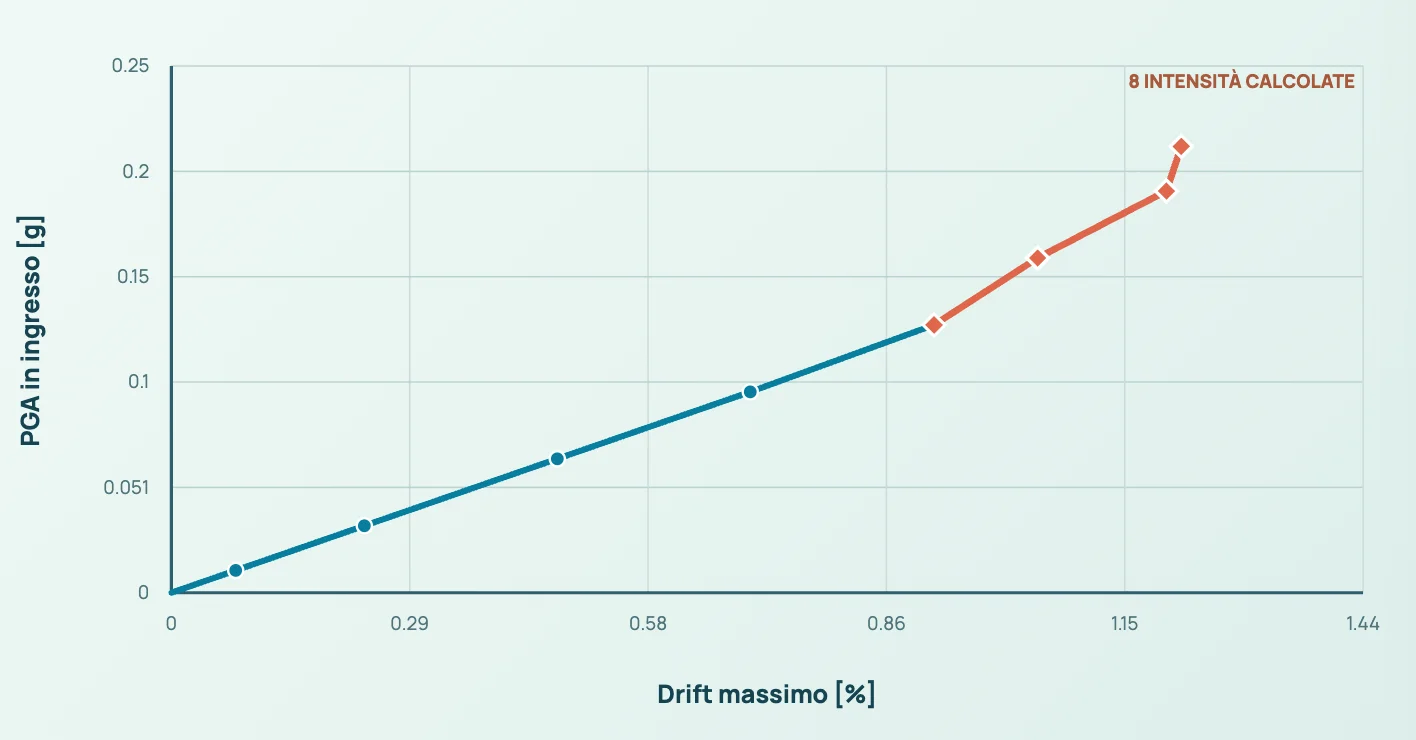
Incremental Dynamic Analysis (IDA) consists of repeated transient calculations at increasing excitation levels. The published DÈLGHEM D2 suite includes 16 completed KratosMultiphysics nonlinear dynamic analyses: eight scales for each of two differently oriented steel-fiber diagnostic models, integrated in time with Newmark. Input PGA, peak drift and plastic strain are preserved with their source-linked analysis histories.
The two analytical orientations are not a sample of independent recorded earthquakes. No collapse is observed in the published runs, so the website does not claim to estimate a statistical fragility curve or seismic collapse probability from them. The examples are intended to demonstrate genuine numerical pathways with well-scoped limitations.
Solver input accelerograms and nonlinear time histories
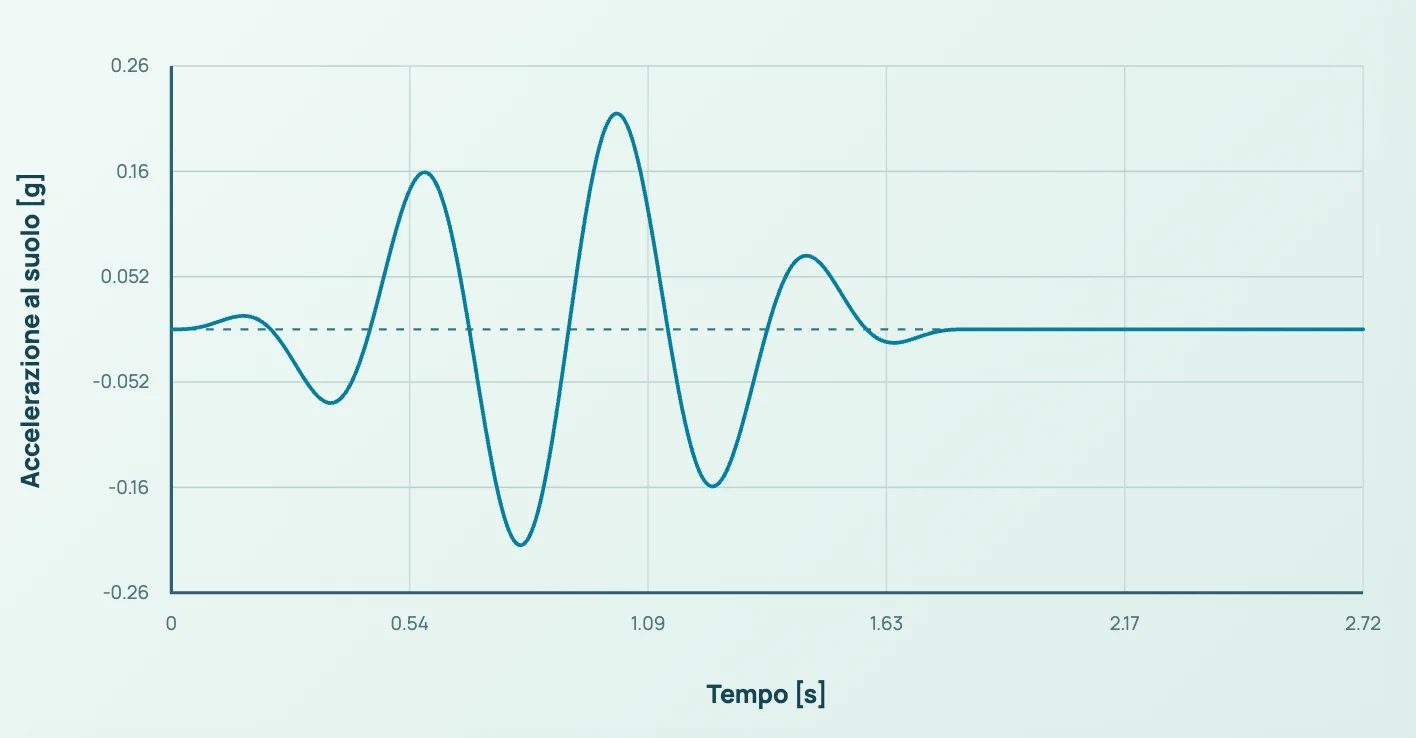
Each charted accelerogram is an analytic diagnostic input actually applied to Kratos, not a certified historical earthquake record. The applied acceleration in g and the calculated control displacement in millimeters can be compared at each of the eight solved intensity scales. The on-page plots also show recorded dynamic base-shear versus displacement trajectories for both orientations.
Engineering application to an actual building additionally requires appropriate mass and damping, considered ground-motion records, timestep convergence, boundary conditions and independent verification. Dynamic analyses are shown for their real solved scope, not as an unrestricted statement of safety or code compliance.
Current scope and future Pushover qualification
DÈLGHEM targets a native Apple Silicon vAlpha1 release in January 2027. The wider project aims to provide structural modeling, nonlinear analysis and engineering reports. A validated general lateral Pushover building capacity workflow is still under development and is not represented here as complete. This page presents source-backed computations that have actually converged on separate test specimens.
See the interactive FEM laboratory, read about Kratos QUAD4 stress contours or review the industrial licensing proposal. Source-code licensing and commercial commitments are handled by direct contact rather than any checkout.
Frequently asked questions
Is the axial loop a verified lateral Pushover curve?
No. The published cyclic benchmark is an axially loaded Kratos steel-fiber specimen, not a lateral structural capacity analysis.
Are the IDA time histories genuinely computed by Kratos?
Yes. Sixteen diagnostic Kratos solves at eight intensities for each of two orientations are published, without observed collapse.
Are the accelerograms measured historic earthquakes?
No. The inputs are analytic diagnostics actually used in the solver, not historical seismic recordings.